

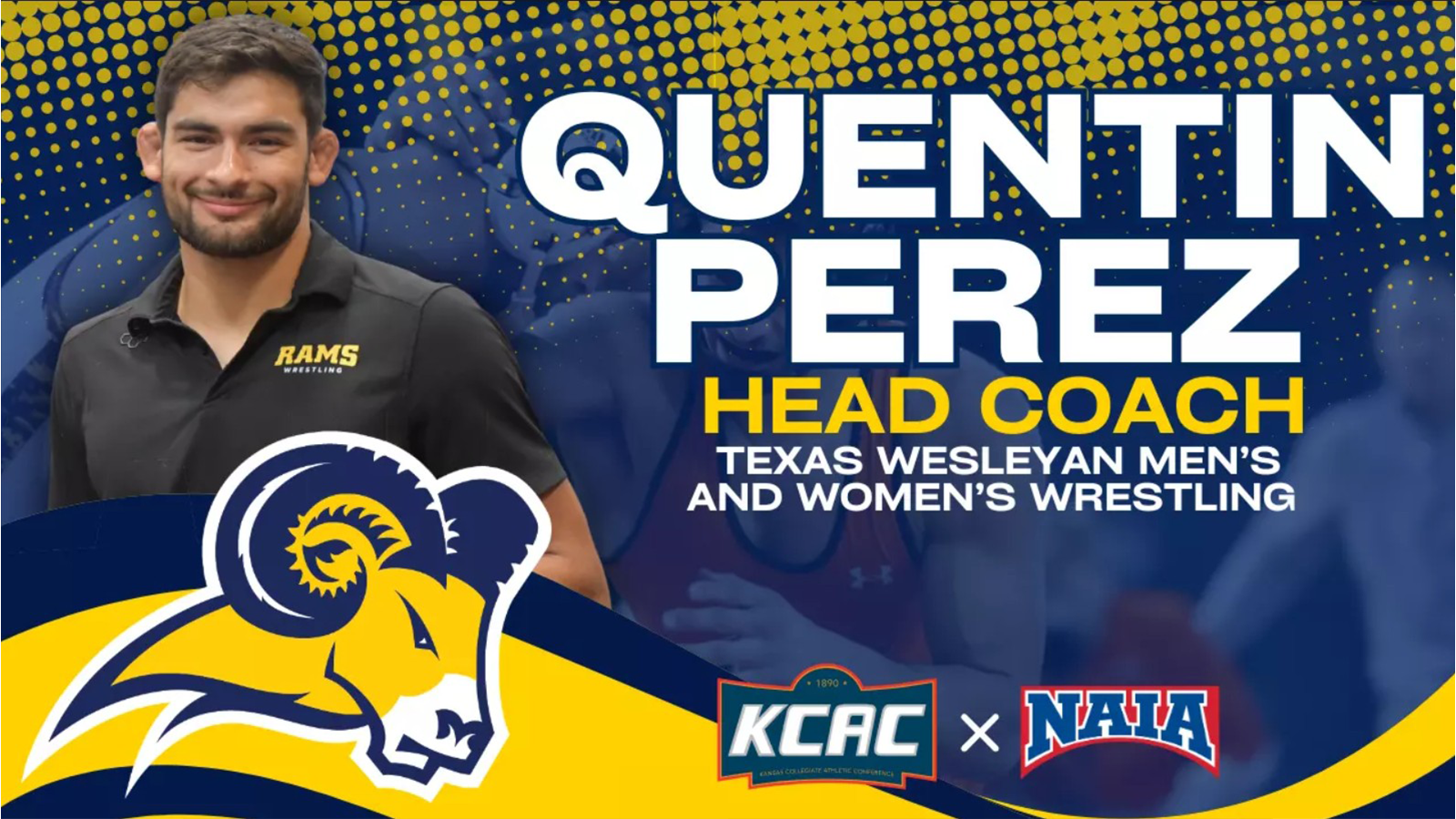
A Q&A With Quentin Perez on Identity, Infrastructure, and Building Something That Lasts
Texas wrestling has never lacked tough kids. What it’s lacked, historically, is cohesion..the kind of structure that carries wrestlers from youth rooms to high school programs and into college without forcing them to leave the state or walk away from the sport.
Quentin Perez lived that reality.
A two time Texas state champion at Arlington High School, Perez came up during a time when elite Texas wrestlers had limited in state options at the next level. He became one of the few from the recent past to break through nationally, qualifying for the NCAA Division I Championships three times and competing in some of the toughest rooms in the country.
Now, years later, Perez is back in Texas..not to revisit his own resumé, but to help build what wasn’t there when he needed it.
Since taking over as head coach at Texas Wesleyan, Perez has been clear about his focus. The conversation isn’t just about wins and rankings. It’s about foundation..culture, development, and creating a real pathway for Texas wrestlers. That vision recently took a real life step forward with obtaining a dedicated wrestling facility: 6,000 square feet total, including roughly 4,000 square feet of mat space, located just off campus. For a growing program, it’s a meaningful investment and a signal of long-term intent.
Below, Perez talks about identity, how Texas wrestling has changed, and what it actually takes to build something sustainable.
Wrestling Texas:
You’re one of the few contemporary wrestlers that won multiple state titles in Texas and still make it to the Division I national tournament. How did the level of in state support or lack of back then shape the way you coach today?
Coach Quentin Perez:
I was lucky enough to wrestle under Coach Henry Harmoney. He went above and beyond as a coach to make sure I had the right training environment. I didn’t have the luxury to be a part of a club or even have the means to get around to different locations. Coach Harmoney went out of his way to take me to whatever he could. His belief in me is a huge reason for my advancements.
Wrestling wasn’t as popular when I was in school, so even winning two state titles was not really celebrated or acknowledged. At the end of the day it was my small circle that pushed me. Although having a set club as a home base is important when it comes to stacking technique, I encourage my athletes to get other perspectives to broaden their knowledge.
Now leading a club, it’s very important to me and our staff to have an understanding of each kid that walks in our doors. I was the athlete that couldn’t afford a drop in fee let alone a monthly membership. But I was willing to work and knew wrestling was going to be my vehicle to a different path (college). It’s very important to me to recognize if I have a kid with a similar situation in front of me and do what we can to help them harness opportunity. I want to be that support for this generation.
Wrestling Texas:
That says a lot..You clearly haven’t forgotten where you came from.
So let me ask..you spent time away from Texas wrestling before returning as a head coach, what’s changed? What stands out to you about how the youth and high school landscape has changed since you were coming up?
Coach Quentin Perez:
It has grown A LOT since I graduated high school. The number of participants and programs has doubled. At the youth level, the level seems to be increasing year by year. Before the state seemed to only have the pockets of good wrestlers but now it is spread out across the state. I’ve been particularly impressed with El Paso and their development of athletes.
Wrestling Texas:
That kind of growth across the state, especially seeing places like El Paso step up, says alot about where things are headed.
But diving a little deeper, you’re taking a different angle with your club Southern Style Wrestling and don’t discourage cross training in judo, jiu-jitsu, and MMA. Why do you think that makes sense for Texas wrestlers?
Coach Quentin Perez:
I think cross training gets wrestlers to think outside the box and move in different ways they’re not used to. You can take something from every sport and if you’re able to apply it to your game it can be beneficial.
Wrestling Texas:
Makes sense. Texas has always had raw talent, but cross training forces you to get uncomfortable. Different positions, different pressure, different pace. It truly keeps you honest and sharp.
And you just don’t talk about it..you’re still actively competing in MMA yourself. How does staying in the fight influence how you lead and connect with your athletes?
Coach Quentin Perez:
I think leading from the front is the best protocol when trying to motivate athletes. If they see me putting in the work and getting results, I hope it will be easy for them to follow along and do the same thing. I don’t like to tell anyone to do something that I wouldn’t do myself. I think it allows me to connect well with my athletes since we are both still competing.
Wrestling Texas:
Yeah..that’s the difference. A lot of guys can talk it, but you’re still on the grind, still competing, and that definitely inspires your athletes to keep pushing through.
Bringing it back to Texas Wesleyan, what are you trying to build there? And how does the new facility fit into that bigger picture?
Coach Quentin Perez:
I would like to get my athletes as connected as possible during their time with me, and give them as many opportunities as possible. I’ve been working with Wrestlers in Business network this year to get some of our kids jobs and internships. The more opportunities we create for our athletes the better I feel as a coach. Beyond that I think building a culture that people want to be a part of is important. The new facility is a physical symbol of what we’re trying to build and I hope people can see it the same way.
Looking Ahead
What Texas Wesleyan is building under Perez isn’t about shortcuts. It’s about removing barriers..giving athletes a real home to train, creating continuity between levels, and building a culture that doesn’t depend on only a few to succeed.
For Perez, returning to Texas feels less like a career move and more like finishing unfinished work. Where he once had to leave the state to find opportunity, he’s now helping create it.
If Texas wrestling is going to match its talent with lasting infrastructure, it will happen because people who experienced the gaps first hand decided to come back and fill them.
Supporting the Program
Those interested in supporting the continued growth of Texas Wesleyan Wrestling..including facility development and athlete support..can contribute through the program’s nonprofit initiative:
Elevate Fort Worth Wrestling Fund
https://www.zeffy.com/en-US/donation-form/elevate-fort-worth-wrestling